
The alarm went off at 4:45 am. Outside, Ghaziabad was still asleep – that particular kind of city silence that exists only in the hour before it wakes up and becomes itself again. I tossed the last bag over the seat, checked the tyre pressure one final time, and looked over at my riding partner doing the same. No grand speeches. Just two Bullets rumbling to life in the dark, and the open road ahead. Five days. Kedarnath. Tungnath. Chandrashila. An 18 km trek in the rain. The world’s highest Shiva temple. We didn’t fully know what we were riding into – and that, as it turned out, was exactly the point.
Day 1: Ghaziabad to Guptakashi – Where the Plains End and the Mountains Begin Whispering
We pulled out at 5:30 am, the kind of early start that feels like a small act of rebellion against ordinary life. The target was Haridwar by 9:30 — ambitious but doable on clear morning roads. Near Muzaffarnagar, we stopped at Shiva Tourist Dhaba, one of those highway stops that looks unremarkable from the outside but serves breakfast so good you remember it weeks later. Wind and light rain had already started, which on a bike isn’t a problem — it’s a gift.
We hit Haridwar right on schedule. There’s a ritual here that isn’t really optional, not when you’re riding to Kedarnath — we parked the bikes, walked to the ghats, and took a dip in the Ganga. The water is cold and indifferent and somehow entirely welcoming. Something resets in you. The city noise fades. The mountains feel closer.
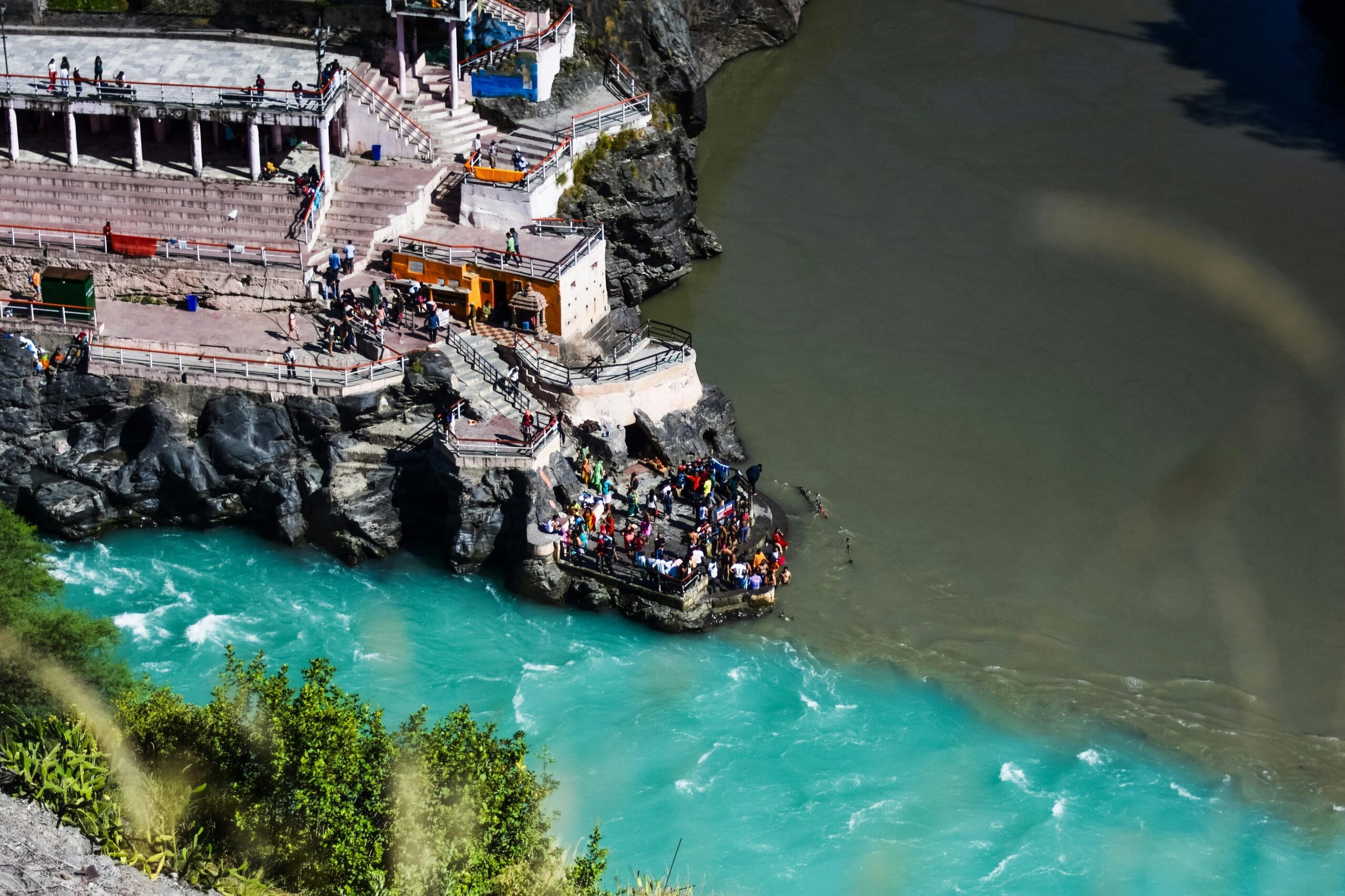
From Haridwar, the Char Dham Highway project has done something remarkable – it’s made roads that used to punish you into ones that simply move you. We covered the stretch to Devprayag by 1 pm with the kind of ease that makes you feel like you’re getting away with something. Devprayag is worth a stop even when you’re in a hurry. It’s where the Alaknanda and Bhagirathi rivers merge into the Ganga, and standing at the sangam watching two distinctly coloured rivers become one is the kind of thing that makes you feel very small in the best possible way.
After lunch, we pushed on towards Guptakashi. The road changed its personality after Srinagar – construction for the Char Dham highway had reduced stretches to few muddy, unpredictable tracks. We bounced and wound our way through it, and honestly? The views more than compensated. Gorges dropping away to your left, peaks appearing through cloud breaks ahead, the river somewhere far below – this is what road trips are actually for. Not the smooth stretches, but the ones that demand your full attention and reward it.
We reached Guptakashi at 7:30 pm as the last light disappeared. Rather than staying in town, we chose a guesthouse about 25 km further towards Sonprayag. Smarter logistics for the early start tomorrow. On long bike trips, proper rest isn’t laziness – it’s how you actually enjoy the journey.
Overnight: Near Sonprayag | Tip: Stay closer to Sonprayag than Guptakashi to beat the morning queue at the Kedarnath registration counter(if not already done).
Day 2: Sonprayag to Kedarnath – The 18 km Trek That Changes You
After a cold night, we woke early, had tea, fired up the Bullets and rode through delightfully muddy post-rain roads to Sonprayag. The registration counter there is non-negotiable – you must register before you can proceed to Gaurikund, so carry a government ID and arrive early. From Sonprayag, a shared taxi covers the 5 km to Gaurikund (₹30–50 per person), and from there, at around 11:30 am, our 18 km trek to Kedarnath began.
I had done my research. I thought I knew what to expect. I was wrong in the best possible way.
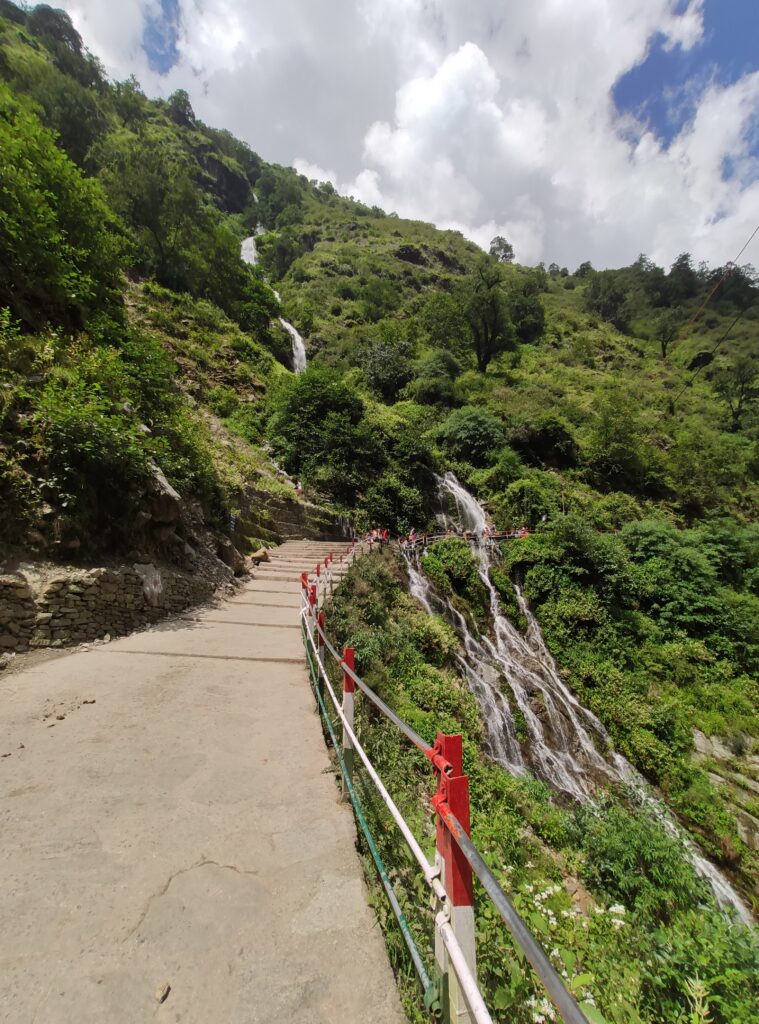
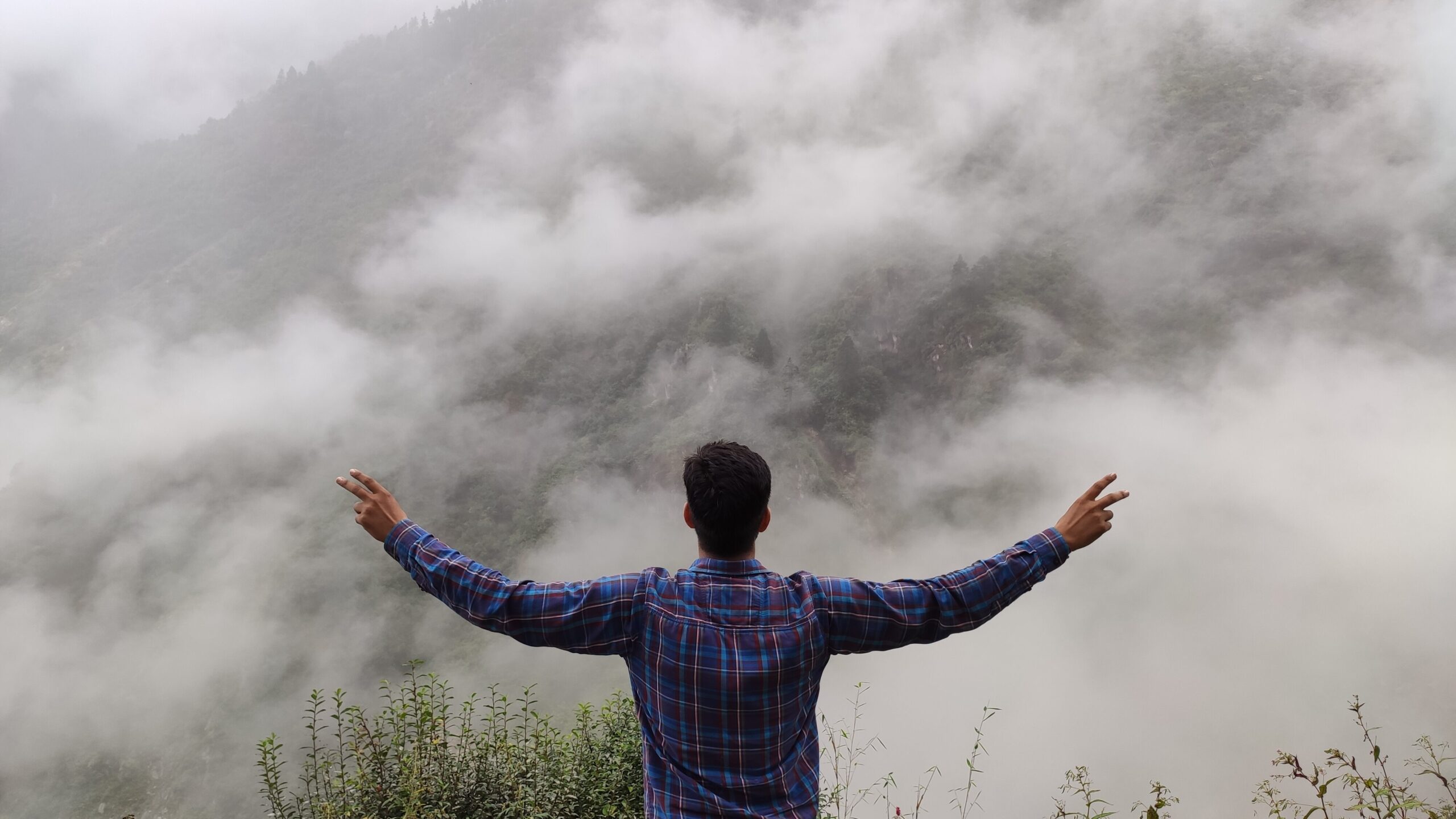
The trail is a completely different world. Waterfalls crash down cliff faces on both sides. Clouds drift through the valley at eye level – not above you, at you. The Mandakini river roars somewhere below. Light rain arrived a few times, which meant we were grateful for our raincoats and grateful for the rain in equal measure. The air gets thinner gradually, almost politely, as though giving you time to adjust. And still the trail climbs.
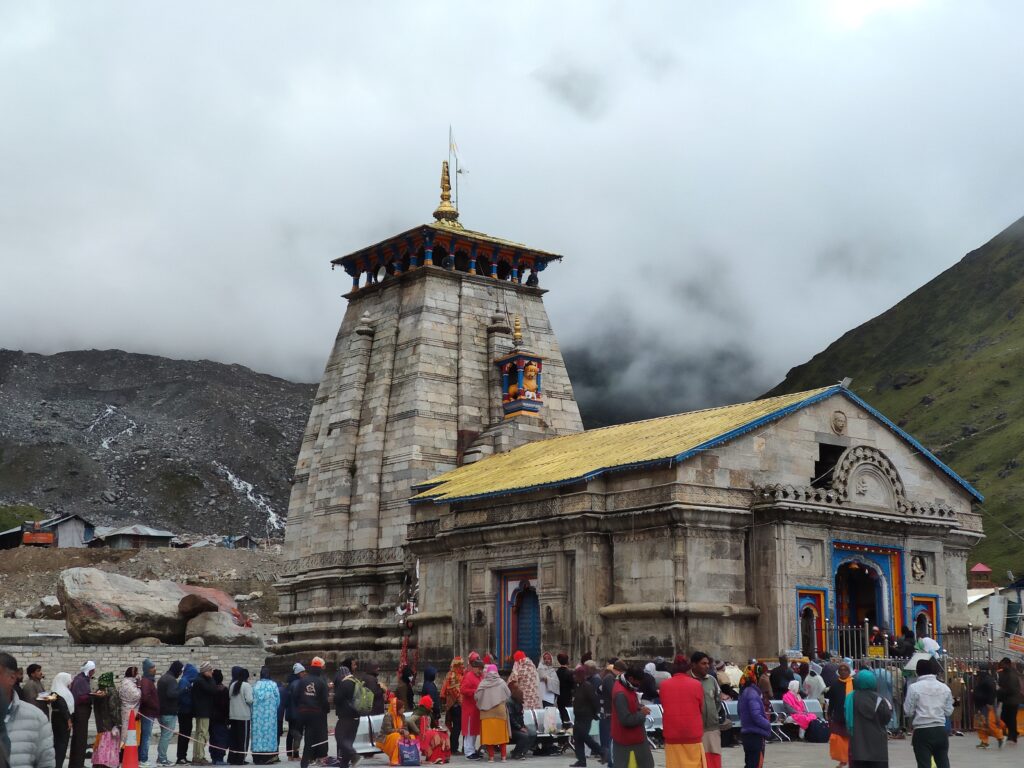
Six and a half hours after we started, at around 6:00 pm, we arrived at Kedarnath Dham.
There are things that are genuinely difficult to put into words, and this is one of them. You’ve been walking all day. Your legs ache. Your pack has started to feel personal. And then you come around a ridge and the ancient stone temple is just – there. Surrounded on all sides by mountains that disappear into cloud, the evening aarti already underway, chants filling the cold air. The temperature had dropped to 1°C. None of that registered at first.
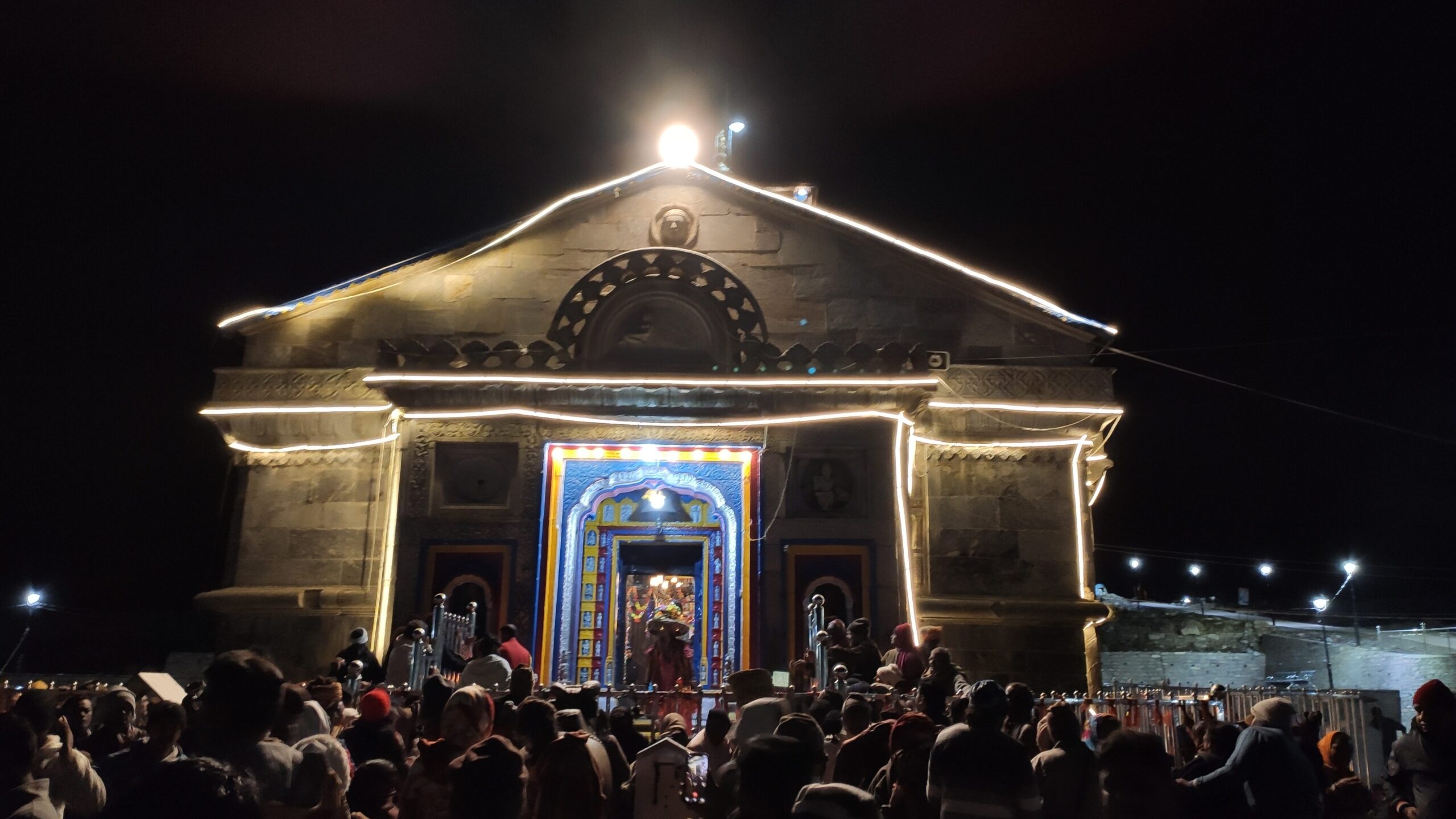
We freshened up at a guesthouse nearby and rushed to the evening aarti. Standing in that crowd, wrapped in every layer we had, listening to those chants echo off the mountains – the aura is something you carry with you afterwards. Not as a memory exactly, but as a change in how you carry yourself.
Dinner was at one of only two dhabas near the temple, both running at full capacity, both somehow managing. Then back to the guesthouse. At 1°C, sleep comes fast.
Overnight: Kedarnath Dham | Tip: Guesthouses near the main temple – book in advance during peak season (May–June). Temperature drops hard after sunset, even in September.
Day 3: Kedarnath to Chopta – Morning Prayers and a Night by the Bonfire
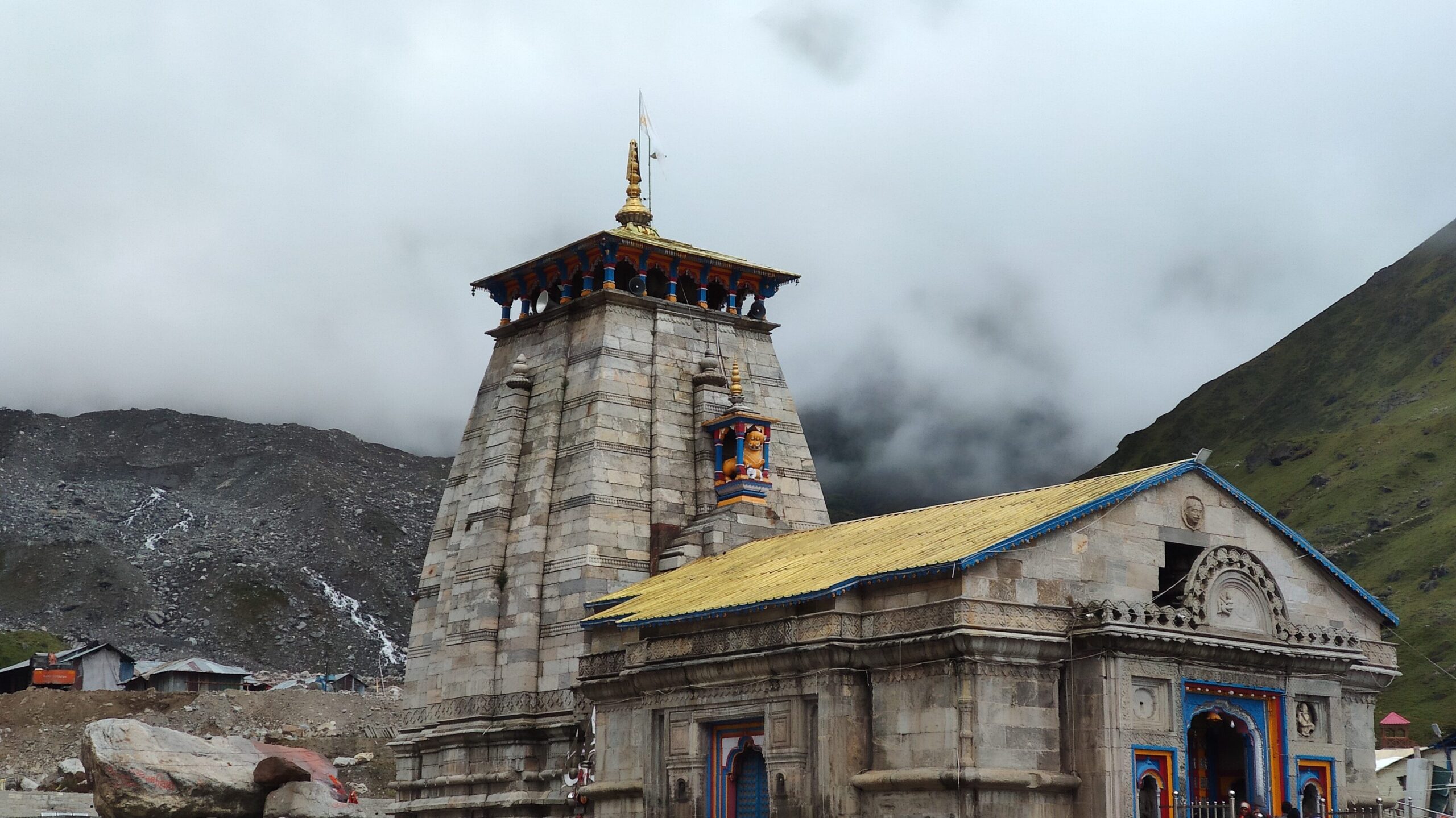
The morning at Kedarnath is a different experience than the evening. The temple bells start early, cutting through mist, and when you step outside you find the clouds wandering through the valley at chest height. Mountain peaks appear in brief, luminous windows and disappear again. We rushed for the morning prayer, stood again in that quietly overwhelming energy, clicked photographs, bought a few small mementos, and then started the long trek back down.
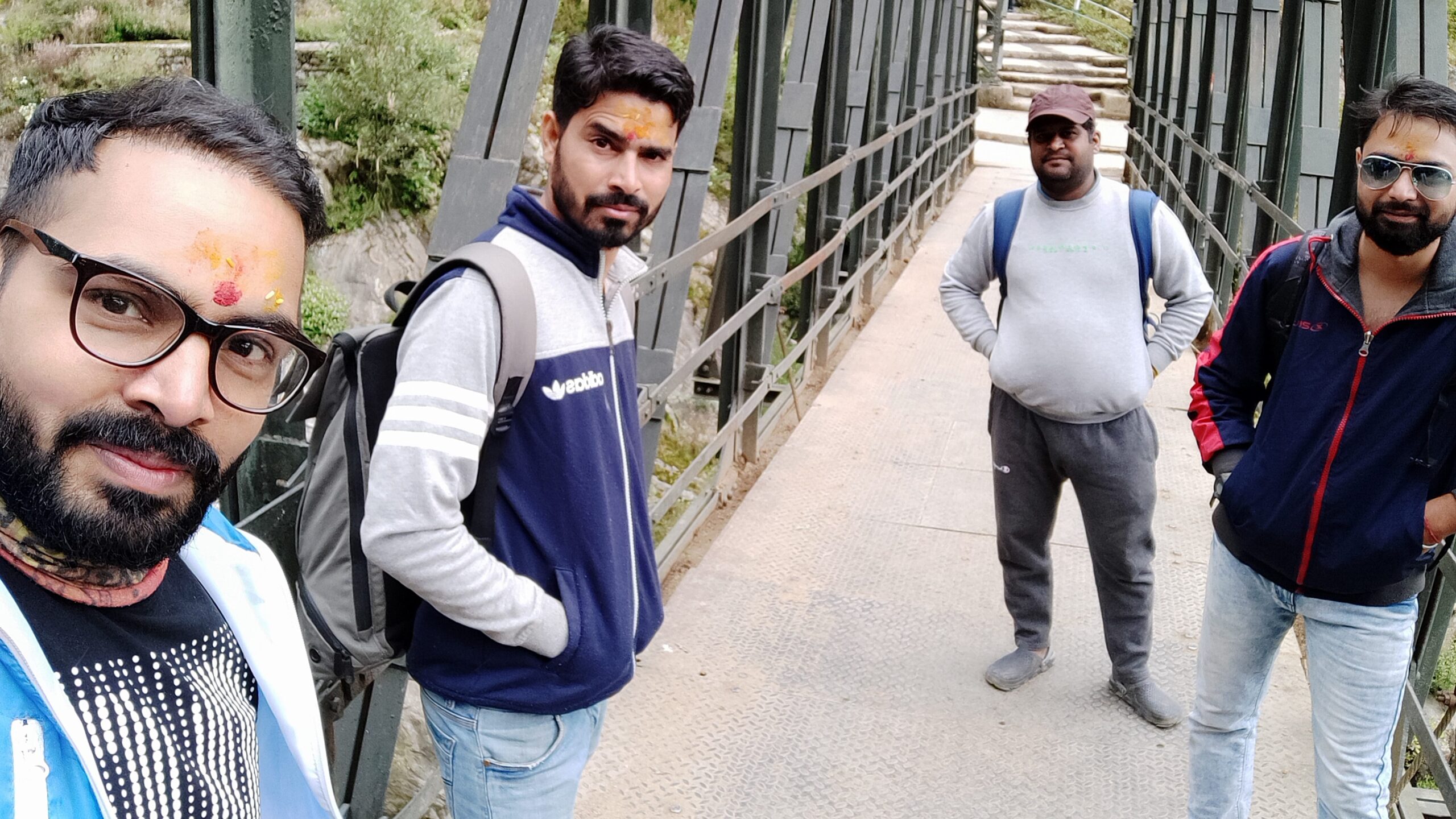
Six hours back to Gaurikund thank to the lazy lads :). The descent is harder on the knees but the views haven’t changed – they’re still extraordinary, still the kind that make you stop mid-step just to look. A shared taxi back to Sonprayag, a proper lunch, and by 4:30 pm we were back on the Bullets heading for Chopta.
The road after Ukhimath had different ideas about our schedule. Bad conditions slowed us considerably, and it was nearly dark when we arrived there with Chopta still 29 km away. We made the call that most riders in our position would make – push on. An hour of riding in the dark on curvy mountain roads, the headlights picking out bends a second before you reach them. It’s not the kind of riding you plan for, but it’s the kind that tests you and finds you capable.
We pulled into Chopta around 8 pm. Checked into the camps, had dinner, and then sat around a bonfire until midnight. Good food. Slow songs. The kind of conversations that only happen when you’re at altitude, slightly exhausted, and have no phone signal. Tomorrow: Tungnath.
Overnight: Chopta Camps | Tip: The bonfire experience here is genuinely worth it. Try to arrive before dark though – the road from Ukhimath is narrow and winding.
Day 4: Chopta to Tungnath and Chandrashila – Standing Above the Clouds
We woke to cold air and a quiet impulse to walk into the woods before breakfast. Best decision of the morning. Frozen, ice-capped peaks visible in every direction, the kind of silence where you become aware of your own breathing. Chopta at dawn is a place that earns its reputation.
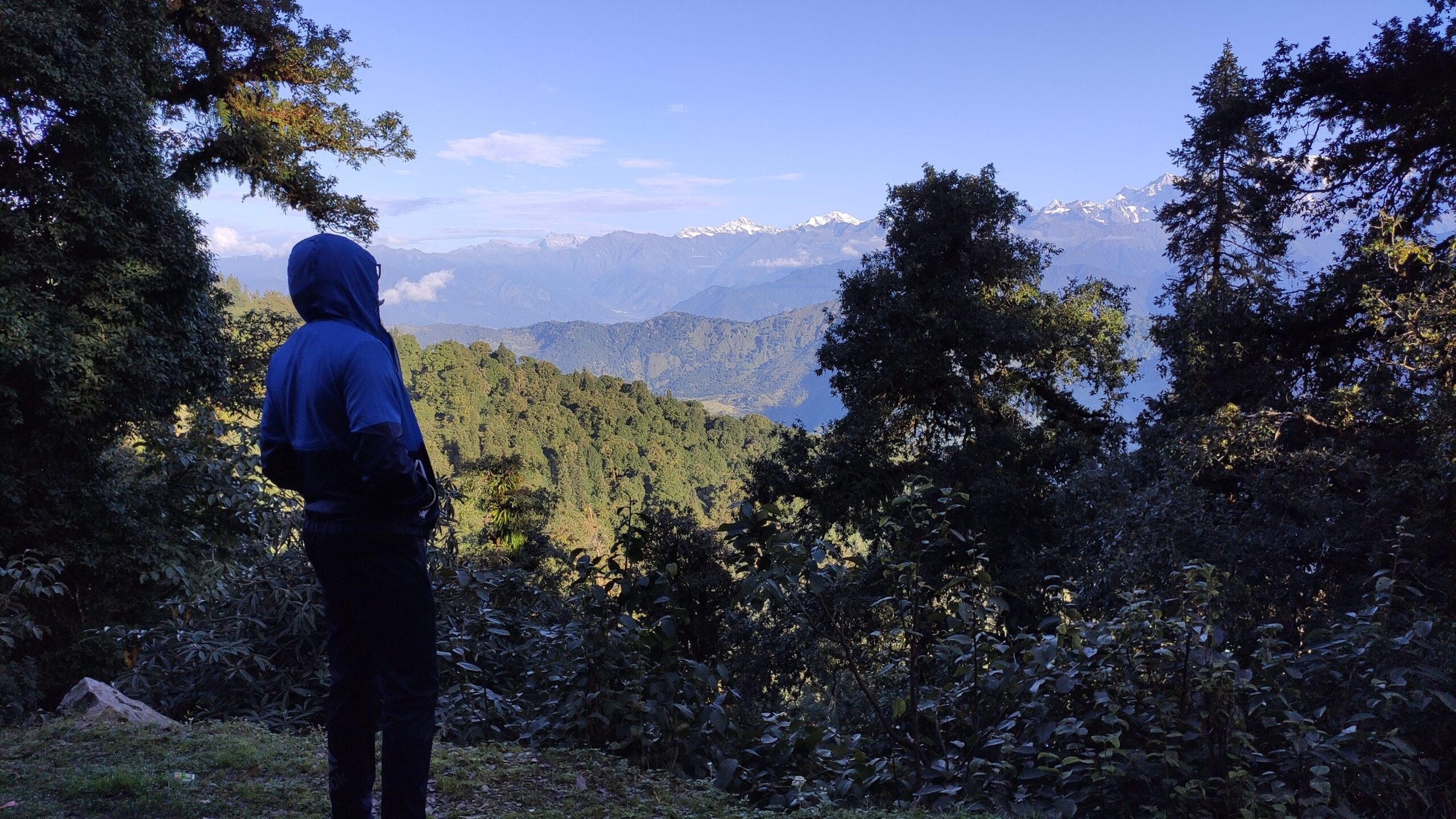
After breakfast we rode to the Tungnath trailhead – and stopped again, because the views from the starting point alone are remarkable. A few photographs short of a full memory card later, the trek began.
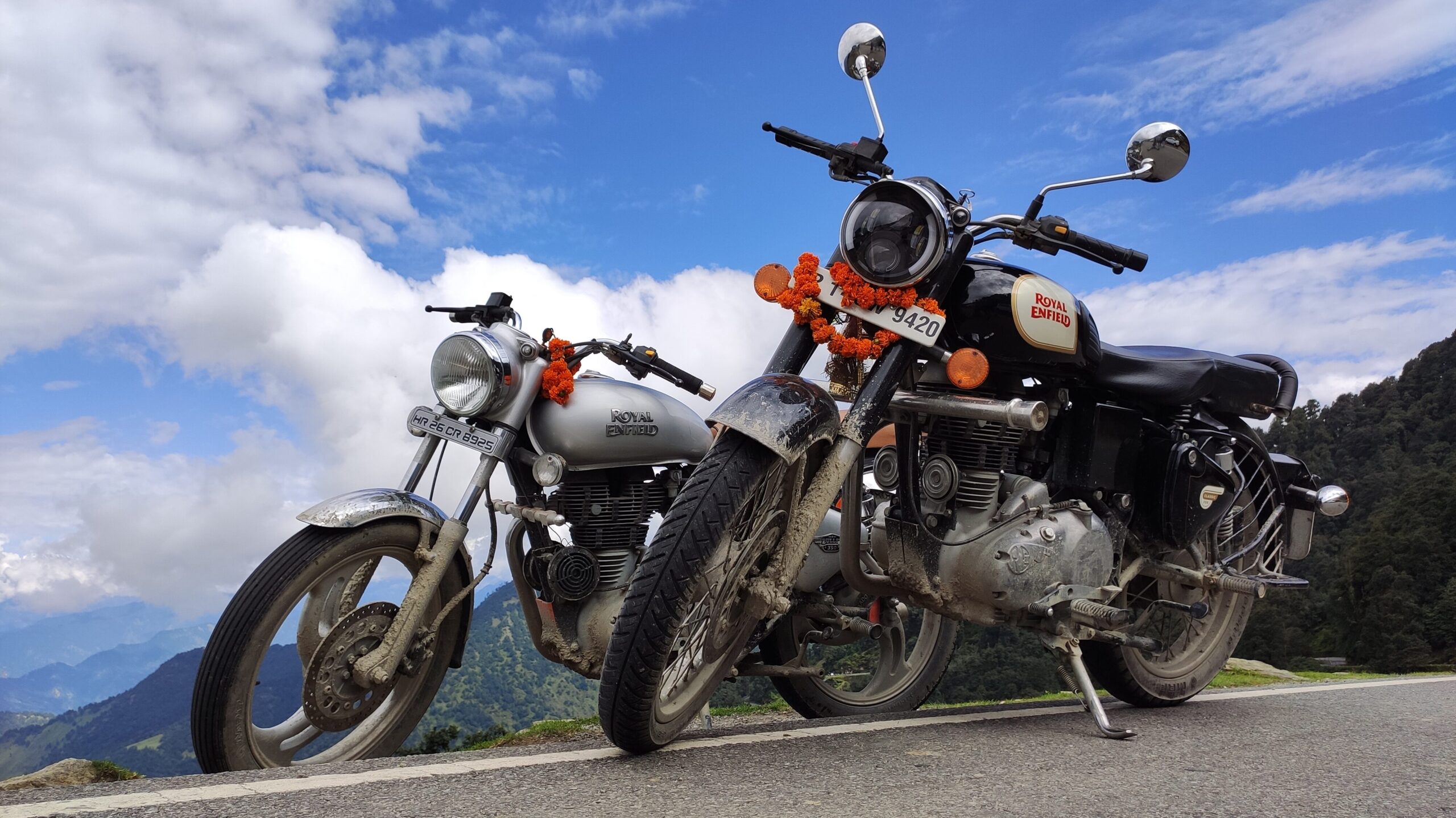
At 4 km, Tungnath is considerably shorter than Kedarnath. Our feet, still carrying the memory of the previous day’s 18 km descent, had some thoughts about the word “shorter.” The trail climbs steadily through the wildlife reserve — dense rhododendrons, wide meadows, open sky. Two hours of walking brought us to Tungnath Temple.
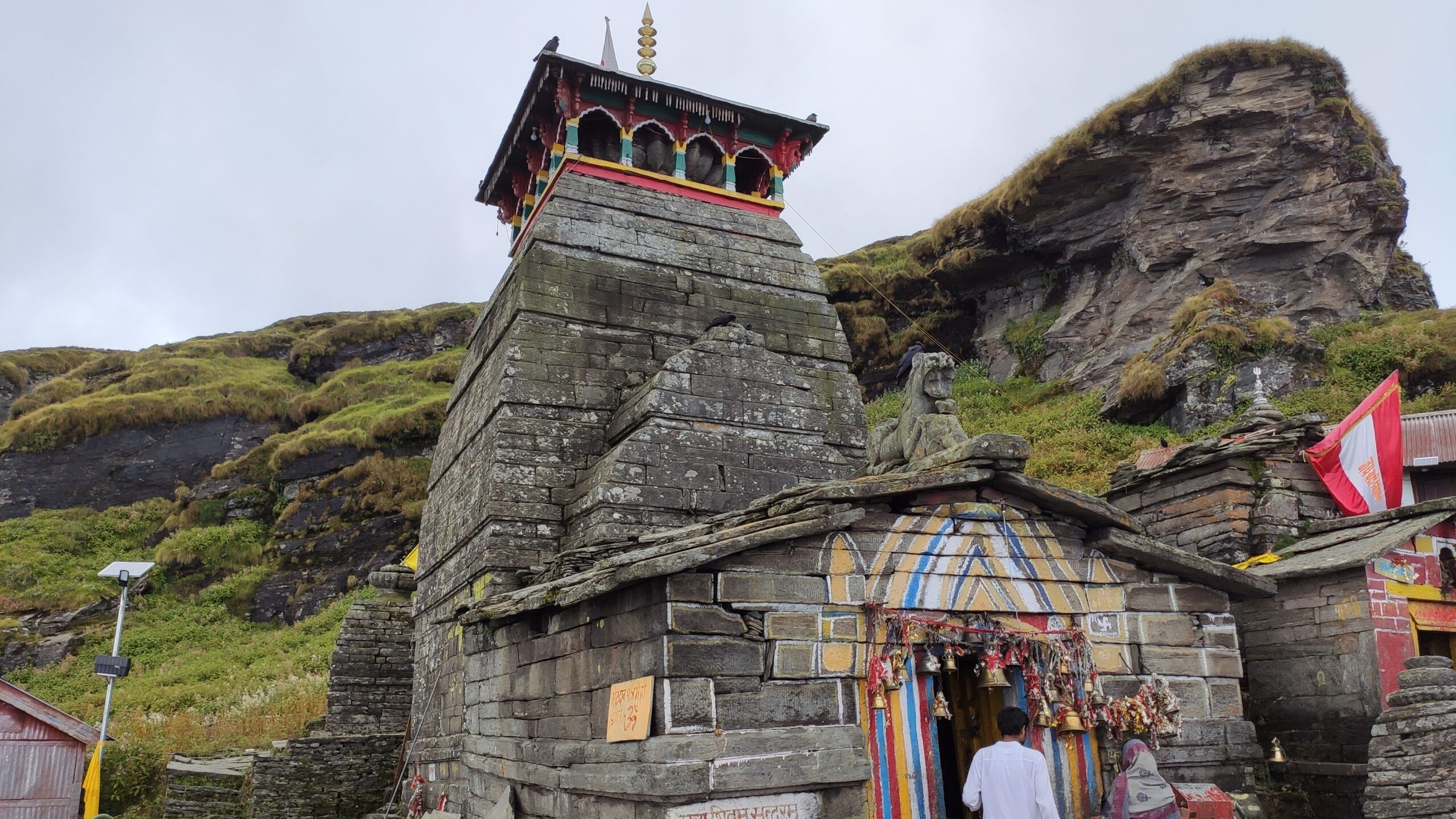
At 3,680 metres, Tungnath is the highest Shiva temple in the world. It’s also one of the oldest. The stone structure sits on the mountain with the quiet authority of something that has simply always been there, and the view from the courtyard — peaks stretching in every direction — makes the climb feel inadequate as payment.
We didn’t stop there. The Chandrashila peak is another 45 minutes beyond, and the trail keeps climbing. When we arrived at the top, I understood why people keep coming back to these mountains.
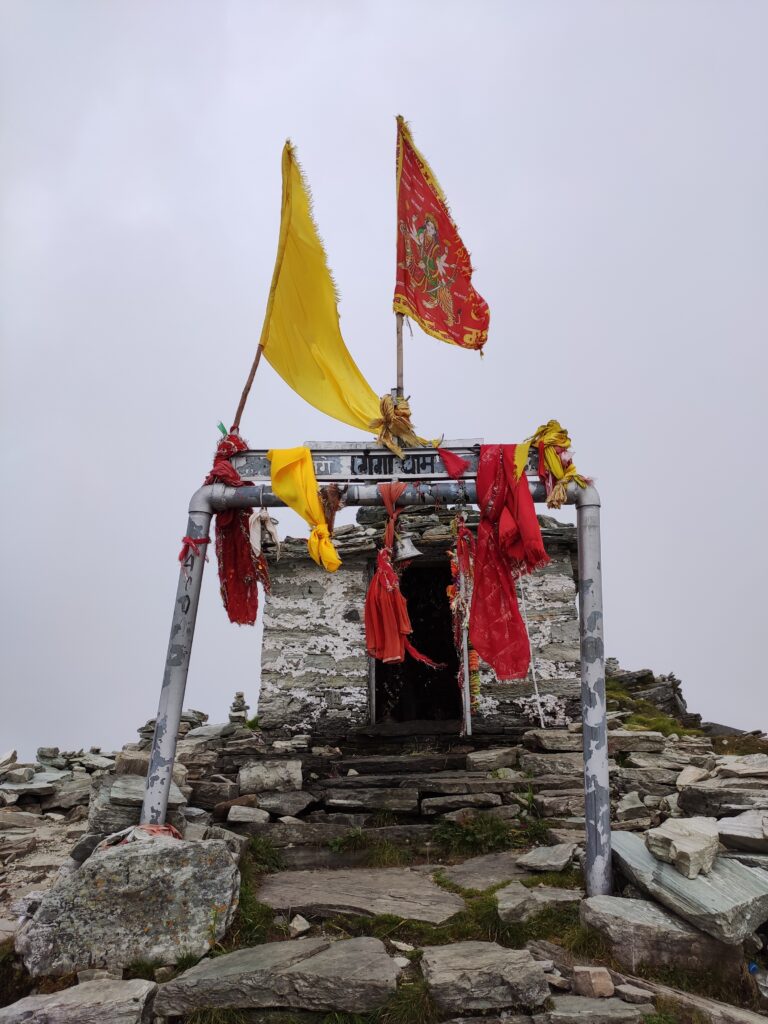
The clouds were below us. Not at our level — below us, drifting between the peaks in slow, theatrical formations. The panorama was total: Nanda Devi, Trisul, Kedar Peak, Bandarpunch — the entire high Himalayan skyline laid out as if specifically arranged for this moment. We sat there for an hour and didn’t want to leave.
But Srinagar was the night’s target, and the mountains don’t bend their distances for you. We rushed back to Chopta, got on the Bullets, and rode hard through the afternoon. Somehow made Srinagar by 8 pm. Dinner, and the deep, uncomplicated sleep of people who’ve spent two days at altitude.
Overnight: Srinagar, Uttarakhand | Tip: Start the Tungnath trek early – afternoon clouds can close in and block the Chandrashila views entirely like for us.
Day 5: Srinagar to Rishikesh to Home – The Last Long Ride
The final day always has a different feeling. Part relief, part reluctance. We packed up in Srinagar and started south, back towards the plains. It was raining heavily – the kind of determined mountain rain that doesn’t negotiate – but after everything we’d ridden through, it felt almost companionable.
We reached Rishikesh by 1 pm, where, in one of those wonderful unplanned travel moments, we ran straight into a friend’s pre-wedding shoot on the ghats. We stayed, laughed, sat by the Ganga, had a proper lunch by the river. The Ganga does something different to you at Rishikesh than it does at Haridwar – there’s a lightness to it, a festivity. Good place to decompress before the final push.
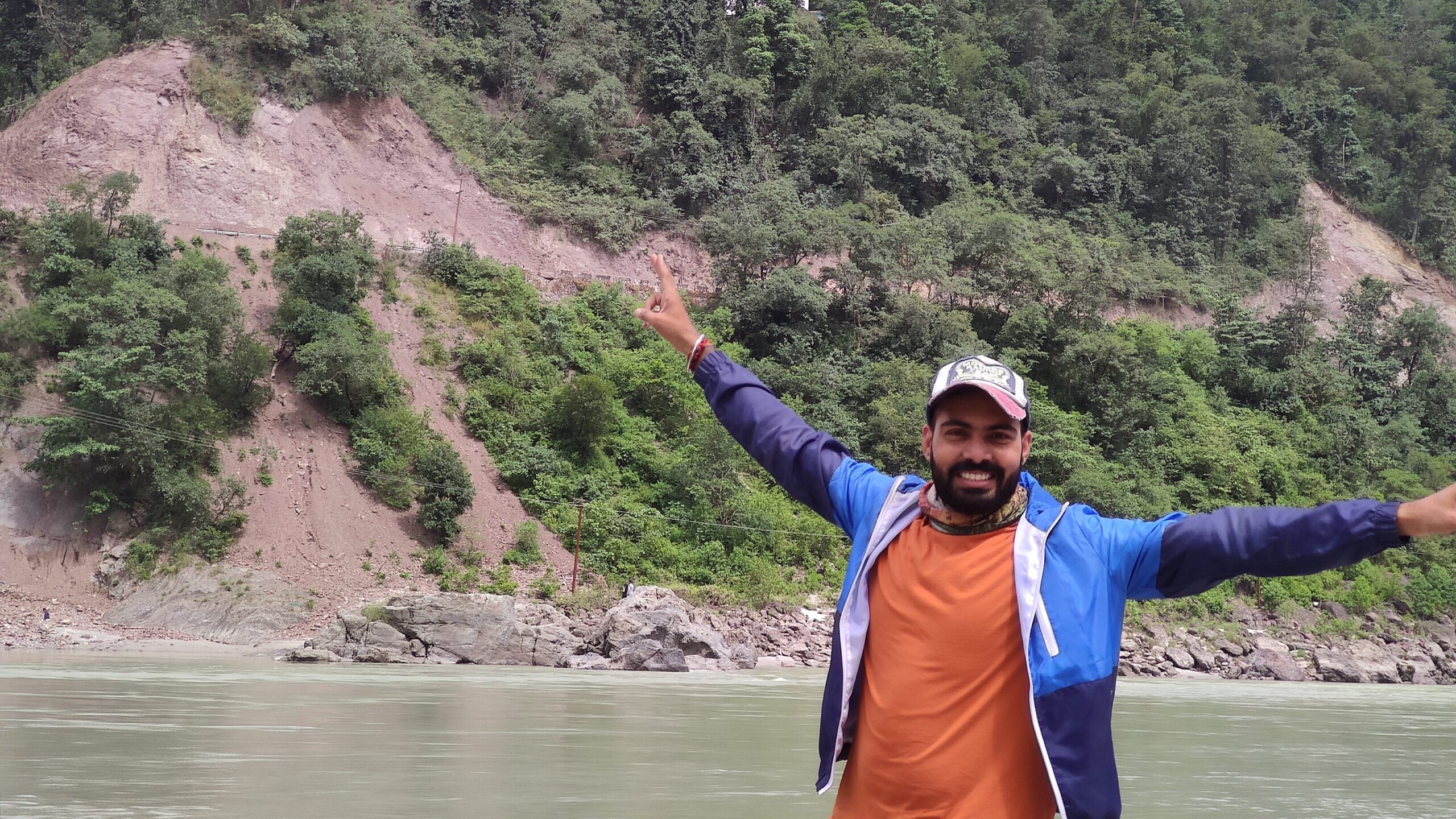
Five hours back to Ghaziabad, arriving home around 7:30 pm.
What This Trip Actually Teaches You
There’s a version of this trip you can do entirely for the check-marks – Kedarnath, done. Tungnath, done. Chandrashila, done. That version is still extraordinary. But if you let it, this route does something more than tick boxes.
The 18 km trek to Kedarnath is genuinely difficult. The cold at the top is real. The dark riding on mountain roads is not for the unprepared. And yet – or because of all that – the moments this trip gives you are the kind that stay. The aarti chants at 1°C. The clouds beneath your feet at Chandrashila. The bonfire at Chopta with no phone signal and nowhere else to be.
We fed our souls. That’s the only way I know to put it. And now we’re planning the next one.
Complete Practical Guide
Best time to visit: May-June and September-October. Kedarnath is closed from November to April. Avoid peak monsoon (July–August) for road safety.
Getting there: Most people drive or ride from Delhi/NCR via Haridwar. The route is NH58 to Rishikesh, then state highways via Devprayag, Srinagar, and Rudraprayag to Guptakashi.
Registration: Kedarnath registration is mandatory at Sonprayag(Now Online). Carry original government ID. Counter opens early – arrive by 8–9 am during peak season to avoid long queues.
Kedarnath trek: 18 km one way from Gaurikund. Start by 10–11 am at the latest for a reasonable arrival time. Ponies and palki (palanquins) available for those who need them. Raincoat, sturdy trekking shoes, and warm layers are essential.
Tungnath trek: 4 km from Chopta to Tungnath temple, plus another 1 km to Chandrashila peak. Moderate difficulty, though harder on tired legs after Kedarnath. Start early.
Where to stay: Night 1 near Sonprayag; Night 2 at Kedarnath (guesthouses near the temple – pre-book during peak season); Night 3 at Chopta camps; Night 4 at Srinagar.
Cash: ATMs are unreliable beyond Guptakashi. Carry enough cash for guesthouses, dhabas, ponies, and taxi fares. Most places won’t have card machines but UPI will work most of the places if you have the signals.
Fuel: Fill up at Rishikesh and Srinagar. Petrol pumps become infrequent in the higher reaches.
*Disclaimer – Please note that this trip was taken in September 2019. While the mountains, the temples, and the magic remain timeless, a few things on the ground – road conditions, accommodation options, registration processes, and pricing – may have changed since then. We’d recommend verifying the latest details before you plan your trip. If you’ve been recently and things look different, drop it in the comments – let’s keep this guide as current as possible for fellow travelers.
**Have you heard the aarti chants at Kedarnath, stood above the clouds at Chandrashila, or simply felt the Bullets rumble beneath you on a mountain road at midnight? Drop it in the comments below – let’s build a community of riders and wanderers who know that some roads aren’t just routes, they’re experiences that quietly rewire you from the inside out.**