
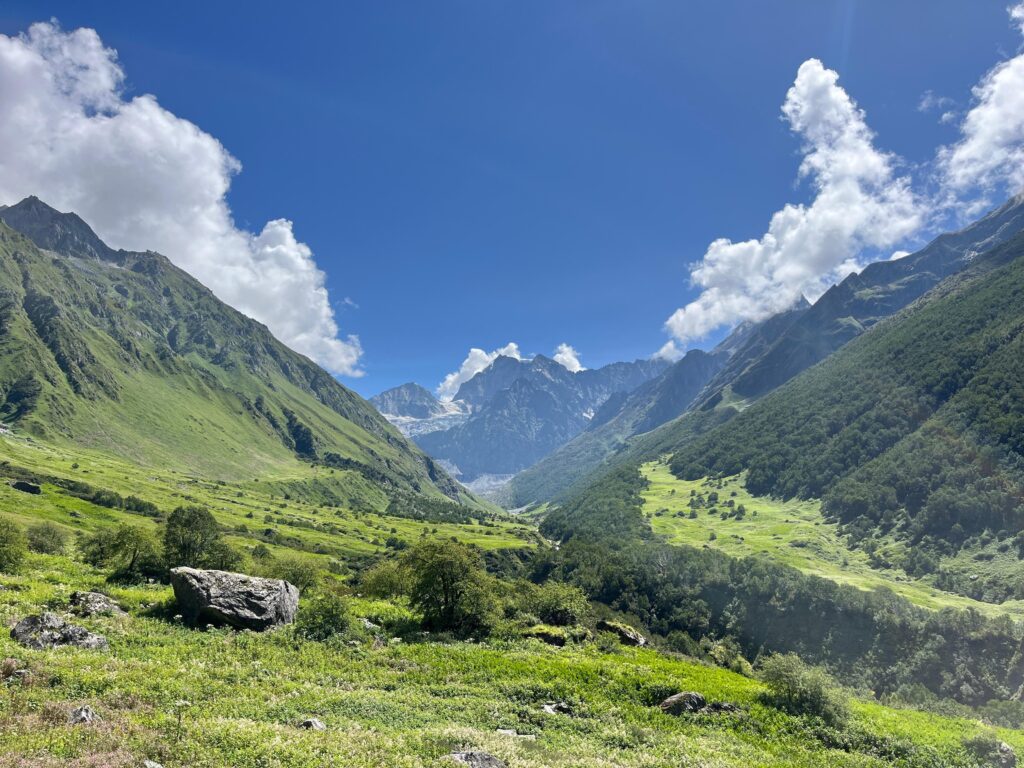
Discover India’s UNESCO Floral Paradise
High in the Garhwal Himalayas of Uttarakhand, the Valley of Flowers National Park operates on its own seasonal rhythm. Snow recedes, the ground softens, and over a brief monsoon window, an alpine basin transforms into one of India’s most biologically dense landscapes.
This is not a summit-focused trek. It is a unique journey through a UNESCO World Heritage Site where over 500 species of alpine flowers bloom in vibrant colors, surrounded by misty mountains, glaciers, waterfalls, and rare Himalayan wildlife. The valley remained unknown until Mountaineer Frank S. Smith discovered it in 1931, and today it converges the Western and Eastern Himalayas.
Whether you’re a nature enthusiast, photography lover, or adventure seeker, this complete 2026 guide will help you plan your Valley of Flowers trek with registration details, budget breakdown, route map, best time to visit, trek organizers, packing essentials, and safety tips.
1. About Valley of Flowers: Key Facts
Essential Information
2. Valley of Flowers Trek 2026: Registration & Permit Process
A. Official Registration Portal
Primary Website:
- www.valleyofflower.uk.gov.in (Official Uttarakhand Government Portal)
- www.yhaindia.org (Youth Hostels Association of India)
B. Step-by-Step Permit Process
Online Registration (Recommended):
- Visit Website: www.valleyofflower.uk.gov.in
- Select Trek Date: Choose your preferred trek date and number of visitors
- Fill the Form: Complete registration form with personal details
- Pay Fee:
- Complete Payment: Pay online via credit/debit card or UPI
- Download Permit: Download and print your permit after successful payment
Offline Registration (At Govindghat):
- Visit Govindghat Forest Office:
- Submit Required Documents:
- Receive Permit:
C. Permit Fees 2026
| Category | Fee | Validity |
|---|---|---|
| Indian Nationals | ₹200 per person | 3 days |
| Foreign Nationals | ₹800 per person | 3 days |
| Camera Fee | ₹200 extra | Per camera |
| Total Cost (Indian) | ₹400 (per person, 2 days) | 3 days |
Note: No additional ILP/RAP (Inner Line Permit/Restricted Area Permit) required for Valley of Flowers (unlike North Sikkim)
3. Valley of Flowers Trek 2026: Complete Budget Breakdown
A. Budget for Individual Travelers (DIY)
Average Budget: ₹6,000–₹9,000 per person (lean budget)
B. Budget for Trek Package (All-Inclusive)
Trek operators offer all-inclusive packages: ₹10,000–₹15,000 per person for 5-6 days (includes accommodation, meals, guide, and permits). You can book your trek packages from Indiahikes or Trek the Himalayas. As both of them are well reputed trek managing companies.
4. Valley of Flowers Trek Route Map & Itinerary
A. Complete Route Map
Main Trek Route:
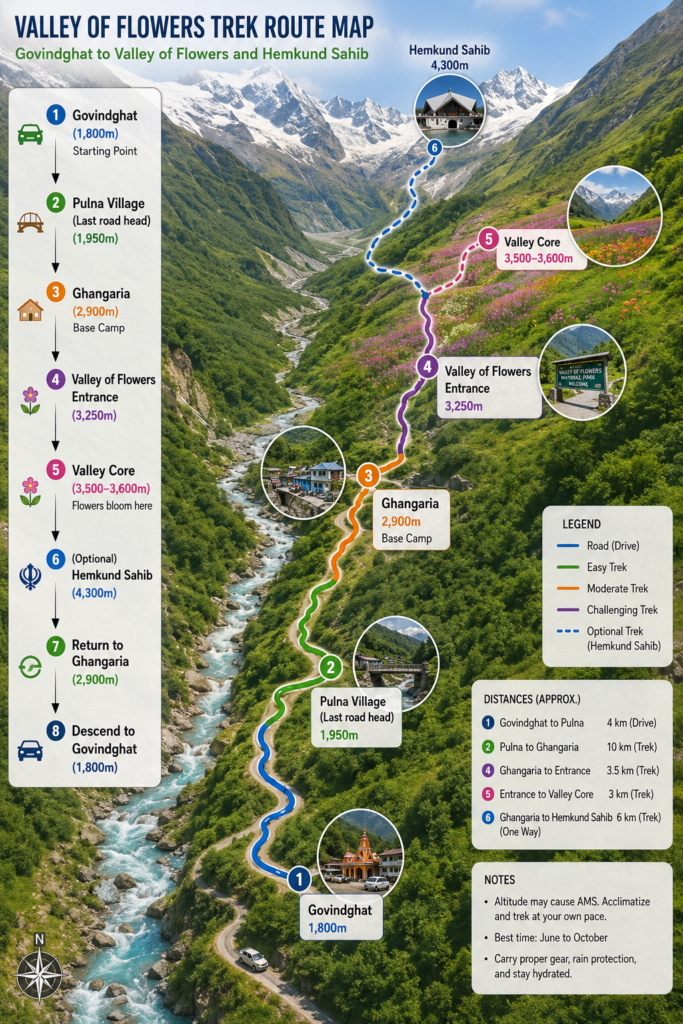
Key Route Points:
- Starting Point: Govindghat (1,800m)
- Last Road Head: Pulna Village
- Base Camp: Ghangaria (2,900m/10,000 ft)
- Valley Entrance: 3,250m
- Valley Core: 3,500–3,600m (flowers bloom here)
- Hemkund Sahib: 4,300m (steep detour, optional)
Total Trek Distance (Govindghat → Valley): ~13 km
B. Detailed 5-Day Itinerary
Day 1: Rishikesh/Haridwar to Govindghat (Base Town)
| Time | Activity |
|---|---|
| 6:00 AM | Depart from Rishikesh/Haridwar |
| 12:00 PM | Lunch at Karnaprayag |
| 4:00 PM | Arrive Govindghat (275 km from Rishikesh) |
| 5:00 PM | Check-in at lodge, rest |
| 7:00 PM | Dinner, pack trekking gear |
| 8:00 PM | Depart for Joshimath (optional) |
Distance: 275 km from Rishikesh
Travel Time: 10-12 hours by road
Accommodation: Lodge at Govindghat (₹800–₹1,500)
Day 2: Govindghat to Ghangaria (10 km Trek)
| Time | Activity |
|---|---|
| 6:00 AM | Breakfast, start trek |
| 6:00 AM–12:00 PM | Trek from Govindghat to Ghangaria (9 km uphill) |
| 12:00 PM | Lunch at Ghangaria |
| 1:00 PM | Check-in at lodge, rest |
| 3:00 PM | Explore Ghangaria, buy permits |
| 5:00 PM | Relax, prepare for Day 3 |
| 7:00 PM | Dinner, rest |
Distance: 9 km uphill
Travel Time: 5-6 hours (walking)
Alternative: Mule ride (₹1,500–₹2,500)
Note: This approach trail gains over 3,000 ft in altitude and is often the most tiring part of the trip
Accommodation: Private lodge at Ghangaria (₹600–₹2,000/night)
Day 3: Valley of Flowers Exploration (Full Day)
Distance: 3.7 km one way (7.4 km total)
Travel Time: 1.5–2 hours (one way)
Note: Trail is relatively gentle once inside the valley
Must Do: Return by 5:00 PM (no camping allowed inside valley)
Day 4: Hemkund Sahib Trek (Optional, 6 km)
| Time | Activity |
|---|---|
| 5:00 AM | Early breakfast, start trek |
| 5:30 AM–9:00 AM | Steep ascent to Hemkund Sahib (6 km one way) |
| 9:00 AM–11:00 AM | Visit Hemkund Sahib shrine, photograph |
| 11:00 AM–1:00 PM | Descend back to Ghangaria |
| 1:00 PM | Lunch at Ghangaria |
| 2:00 PM–5:00 PM | Rest, relax, explore valley again |
| 7:00 PM | Dinner, rest |
Distance: 6 km one way (12 km total)
Altitude: 4,300m (steep detour)
Note: Steep and strenuous ascent that requires good stamina and acclimatization
Optional: Skip if feeling tired or acclimatization issues
Day 5: Ghangaria to Govindghat (Return Trek)
| Time | Activity |
|---|---|
| 6:00 AM | Breakfast, start descent |
| 6:00 AM–11:00 AM | Trek back to Govindghat (9 km downhill) |
| 11:00 AM | Lunch at Govindghat |
| 12:00 PM | Check-out from lodge |
| 2:00 PM | Depart for Rishikesh/Haridwar |
| 8:00 PM | Arrive Rishikesh/Haridwar |
Distance: 9 km downhill
Travel Time: 4–5 hours (walking)
Alternative: Mule ride (₹1,500–₹2,500)
Optional Day 6: Depart Govindghat for Rishikesh (if staying overnight)
C. 6-Day Extended Itinerary (Recommended)
Day 1: Rishikesh → Govindghat
Day 2: Govindghat → Ghangaria
Day 3: Valley of Flowers Exploration
Day 4: Hemkund Sahib Trek (Optional)
Day 5: Ghangaria → Govindghat
Day 6: Govindghat → Rishikesh (relaxed return)
Why 6 Days: Better for acclimatization, more time to explore valley, less rushed experience
5. Best Time to Visit Valley of Flowers 2026
A. Seasonal Blooming Guide
Opening Date: June 1, 2026
Closing Date: October 31, 2026
B. Specific Best Time for 2026
ULTIMATE BEST TIME:
- Late July to First Two Weeks of August (July 25–August 15)
- Why: Monsoon coaxed the valley into full bloom
- Expect: Vibrant array of flowers, spectacular visual treat
Alternative Best Time:
- Mid-August to Early September (August 15–September 5)
- Why: Peak + late-blooming flowers, fewer crowds
- Expect: Beautiful flowers, slightly cooler weather
Budget Traveler Time:
- Early July to Mid-July (July 1–15)
- Why: Early bloom, lowest crowds, cheaper accommodation
- Expect: Green valley, beginning flowers, less expensive
6. Valley of Flowers Trek Difficulty Level & Fitness Requirements
A. Trek Difficulty Classification
Important Reality: While many blogs call this an “easy” trek, the reality is moderate-to-challenging approach
B. Fitness Requirements
Minimum Fitness Level:
- Can run 5 km in under 40 minutes
- Basic stamina: Can walk 9 km uphill on stone path with pack
- Age Consideration:
Physical Preparation Checklist:
- ✅ Can walk 10 km continuously
- ✅ Can climb stairs 3–4 floors without rest
- ✅ Can carry 5–7 kg backpack for 1 hour
- ✅ Basic cardiovascular fitness (running/jumping)
Recommended Pre-Trek Training (4 Weeks):
- Week 1: 5 km walking, 3 times/week
- Week 2: 7 km walking, 3 times/week
- Week 3: 10 km walking, 3 times/week + stair climbing
- Week 4: 10 km walking + hiking with backpack (5 kg)
C. Medical Requirements
Medical Certificate:
- Required: NO (for age <58 years)
- Required: YES (for age >58 years) – Negative Tread Mill Test (TMT) Report
Health Conditions to Avoid:
- ❌ Respiratory problems (high altitude)
- ❌ Severe medical conditions
- ❌ Heart disease (without TMT report)
- ❌ Recent injuries or surgery
Consult Medical Professionals: Assess fitness level before joining the trek
7. Best Trek Organizers for Valley of Flowers 2026
A. Top-Rated Trek Agencies
| Agency | Rating | Package Cost | Why Choose |
|---|---|---|---|
| Indiahikes | ⭐⭐⭐⭐⭐ 4.8/5 | ₹12,000–₹15,000 | India’s top-rated trekking agency, trusted by 100,000+ trekkers |
| Trek The Himalayas (TTH) | ⭐⭐⭐⭐⭐ 4.7/5 | ₹11,000–₹14,000 | Bookings open for 2026, moderate trek expert |
| Super Trekkers | ⭐⭐⭐⭐⭐ 4.6/5 | ₹10,000–₹13,000 | Expert guide, seamless Himalayan treks |
| TrailHikers | ⭐⭐⭐⭐ 4.5/5 | ₹10,000–₹12,000 | Book online, 2026 packages available |
| Universal Adventures | ⭐⭐⭐⭐⭐ 4.7/5 | ₹11,000–₹14,000 | Professional guides, safety-first approach |
| Danu Adventure | ⭐⭐⭐⭐⭐ 4.6/5 | ₹10,000–₹13,000 | Best trekking guide 2026, comprehensive |
B. Youth Hostels Association (YHA) Option
Youth Hostels Association of India:
C. Package Comparison
| Package Type | Cost | Includes | Best For |
|---|---|---|---|
| Budget Package | ₹10,000–₹12,000 | Transport, accommodation, meals, guide, permits | Budget travelers |
| Standard Package | ₹12,000–₹15,000 | All above + mule ride, better accommodation | Most travelers |
| Premium Package | ₹15,000–₹18,000 | All above + camping equipment, photography support | Luxury seekers |
Trek operators offer all-inclusive packages: ₹10,000–₹15,000 per person for 5-6 days itinerary (includes accommodation, meals, guide, and permits)
8. What to Pack: Valley of Flowers Trek Essentials
A. Complete Packing List
Clothing (5–6 Days):
Warm Wear (Mandatory):
Footwear:
Hydration & Nutrition:
| Item | Quantity | Purpose |
|---|---|---|
| Trekking Bottle | 2 Nos (1L each) | One thermostat Milton bottle |
| Protein Bars | 10–15 | Energy snacks |
| Electral Sachets | 5 (1L each) | Hydration |
Safety & Tools:
Personal & Toiletries:
Medicines (Essential Kit):
Electronics:
| Item | Quantity | Purpose |
|---|---|---|
| Camera | 1 Nos | Photography (optional) |
| Notebook & Pen | 1 Nos | Writing |
| Sunglasses | 1 pair | Curved (UV protection) |
B. Packing Tips
- Wear Layered Clothing: Thermals + fleece + jacket for temperature changes
- Waterproof Everything: Poncho, raincoat, waterproof sack cover mandatory
- Travel Light: Minimal toiletries, share with friends
- Pack Medicines: Essential kit for altitude sickness, pain, allergies
- Trekking Shoes: Waterproof, high ankle, with grip (mandatory)
- Power Bank: Essential for mobile charging (no electricity at camps)
- Trekking Pole: Helps on steep ascent to Hemkund Sahib
- Snacks: Protein bars for energy during trek
9. Valley of Flowers Trek: Important Tips & Safety
A. Safety Checklist
B. Weather & Monsoon Tips
Monsoon transforms valley into lush green paradise with waterfalls and misty mountains
C. Camp & Accommodation Tips
D. Flower Photography Tips
500+ species of alpine flowers bloom in vibrant colors during peak season
10. Valley of Flowers Trek: FAQs
Frequently Asked Questions
Q1: When does Valley of Flowers open in 2026?
Ans: Opens on June 1, 2026 and closes on October 31, 2026
Q2: Is medical certificate required for Valley of Flowers?
Ans: NO for age <58 years. YES for age >58 years (Negative Tread Mill Test)
Q3: How much is the permit fee for Indians?
Ans: ₹200 per person (3-day validity)
Q4: How much is the permit fee for foreigners?
Ans: ₹800 per person (3-day validity)
Q5: Can I camp inside Valley of Flowers?
Ans: NO, camping is not allowed inside the valley. Stay at Ghangaria
Q6: What is the best time to visit Valley of Flowers?
Ans: Mid-July to Mid-August (peak blooming season)
Q7: Is Valley of Flowers trek suitable for beginners?
Ans: YES, moderate-level trek suitable for beginners with basic fitness
Q8: How many days do I need for the trek?
Ans: 5–6 days recommended (4 days trek + 1–2 days travel)
Q9: What is the altitude of Valley of Flowers?
Ans: Valley Entrance: 3,250m, Valley Core: 3,500–3,600m
Q10: How far is Ghangaria from Govindghat?
Ans: 9 km uphill (10 km total trek)
Q11: Can I do Hemkund Sahib trek?
Ans: YES, optional 6 km one-way steep detour to 4,300m. Requires good stamina
Q12: What is the total trek distance?
Ans: 13 km (Govindghat → Valley of Flowers)
Q13: Do I need additional permits (ILP/RAP)?
Ans: NO, no additional Inner Line Permit/Restricted Area Permit required
Q14: Is there electricity at Ghangaria?
Ans: Limited, no electricity at camps. Carry power bank
Q15: What should I pack for monsoon trek?
Ans: Waterproof clothing, poncho, trekking shoes with grip, sunscreen, power bank, protein bars, medicines
11. Final Verdict: Is Valley of Flowers Worth It?
Quick Decision Guide
📱 Essential Apps to Download
Check the below video of the Hiking Planet to soak the beauty of Valley of flowers
From Ghangaria’s misty embrace to Valley of Flowers’ vibrant bloom—every step through this UNESCO paradise reveals nature’s masterpiece. Pack your rain gear, tread lightly on alpine carpet, and let the Himalayas heal your soul. Ready to discover India’s floral paradise? Your Valley of Flowers adventure awaits in 2026!